AI Sales Operations vs. Sales Automation: What Small B2B Teams Need to Know
By the Tracklibute team · October 24, 2026
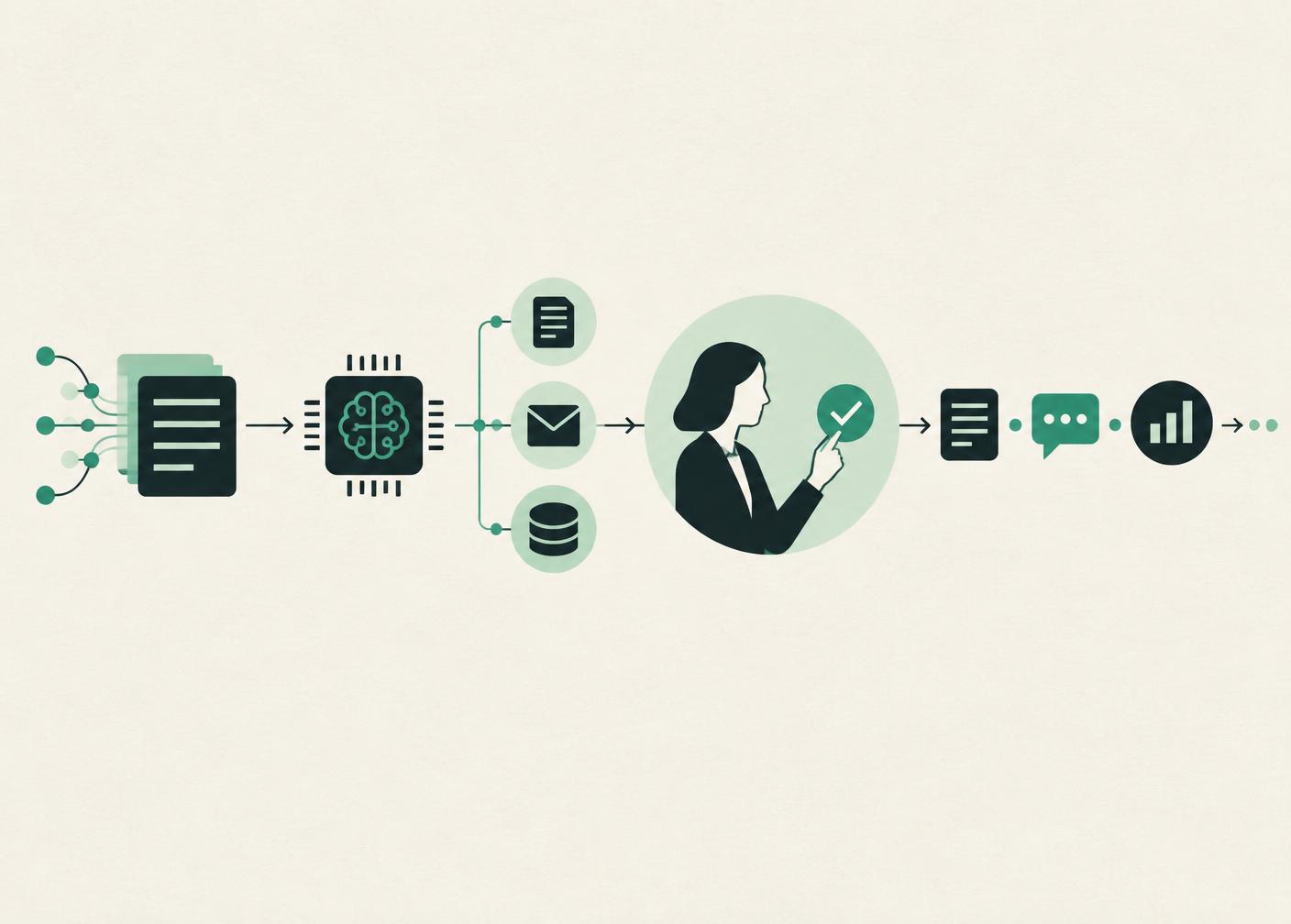
Sales automation and AI sales operations sound similar, but they solve different problems. Sales automation helps teams carry out repeatable tasks using predefined rules. AI sales operations helps teams interpret sales information, identify what needs attention, and prepare the next step. For a small B2B company with two to ten salespeople and no dedicated revenue operations team, that difference matters. The goal is not simply to automate more activity. It is to reduce the administrative work around selling while keeping people in control of customer relationships and important decisions. Here is how the two approaches compare, where each fits, and how to choose the right support for your team.
1. What Is Sales Automation?
Sales automation uses rules, triggers, and templates to perform predictable tasks. When a defined event happens, the system carries out a predefined response.
Common examples include:
- Creating a task when a new lead enters the CRM.
- Sending a reminder before a scheduled meeting.
- Assigning an inbound inquiry based on territory.
- Adding a follow-up task after a deal changes stage.
- Notifying a manager when a close date passes.
The main strength of sales automation is consistency. Once the rule is configured correctly, people do not have to remember every small administrative step.
Consider a rule that creates a follow-up task three days after a proposal is sent. It is straightforward, useful, and easy to understand. It reduces the chance that a salesperson forgets to check back.
However, the rule does not necessarily understand what happened in the conversation. The buyer may have requested two weeks for an internal review, or the salesperson may already have arranged a call. Unless those conditions are captured in the logic, the same task appears anyway.
Sales automation works best when the process is stable, the inputs are reliable, and exceptions are limited.
2. What Is AI Sales Operations?
AI sales operations applies AI to the coordination and administrative work that surrounds a sale. Rather than relying only on predefined triggers, it can use available sales context to help determine what matters and what should happen next.
That work can include lead qualification, company research, follow-up management, meeting preparation, CRM hygiene, pipeline monitoring, and proposal follow-up.
For example, instead of creating the same task whenever a proposal is sent, an AI sales operations platform can help review the available context:
- What did the buyer say about timing?
- Is there an agreed next step?
- Has a relevant question gone unanswered?
- Does the CRM record reflect the latest conversation?
- What should the salesperson review before following up?
The useful output is not just another notification. It might be a proposed next action, a contextual follow-up draft, or a flagged gap in the deal record.
Tracklibute is an AI Sales Operations platform designed for small B2B sales teams without a dedicated RevOps function. It supports this operational work while keeping sensitive actions, such as sending emails or changing deal stages, subject to explicit human approval.
The distinction is important: AI helps prepare and coordinate the work. It does not remove the salesperson’s responsibility for judgment.
3. The Main Differences in Daily Sales Work
The clearest way to compare the two approaches is to look at how they handle everyday work.
| Area | Sales automation | AI sales operations |
|---|---|---|
| Starting point | A defined trigger or schedule | A trigger plus available sales context |
| Decision logic | Predetermined conditions | Contextual interpretation within defined boundaries |
| Typical output | A task, reminder, notification, or update | A recommendation, summary, draft, or proposed update |
| Handling exceptions | Requires additional rules | Can help identify exceptions for review |
| Human involvement | People configure and maintain rules | People provide direction, review outputs, and approve sensitive actions |
These are not absolute boundaries. Many sales tools combine rule-based automation with AI features. The practical question is how much interpretation the system provides and how much control the team retains.
Lead qualification illustrates the difference. A rule can prioritize an inquiry because the company matches a selected industry and employee range. AI can also help interpret the inquiry itself: whether there is a clear business problem, a relevant use case, or missing information that requires a discovery question.
Meeting preparation offers another example. Automation can remind a salesperson that a call starts tomorrow. AI sales operations can help assemble the relevant account history, outstanding questions, and previous commitments into a preparation brief.
Neither approach eliminates the need for accurate information. If the underlying records are incomplete, recommendations may be incomplete too. Useful AI support should make uncertainty visible rather than turn assumptions into facts.
4. When Simple Automation Is Enough—and When It Is Not
Not every operational problem needs AI. Adding interpretation to a task that only needs a reliable rule can create unnecessary complexity.
Simple automation is often enough when:
- The same action should happen every time.
- The necessary information is already structured.
- There are few meaningful exceptions.
- The result is easy to check.
A reminder to review deals with overdue close dates is a good example. There is a clear date, a clear condition, and a clear recipient.
AI sales operations becomes more useful when the team repeatedly has to gather information, interpret it, and decide what deserves attention.
For instance, a manager reviewing stalled opportunities may need more than a list of deals without recent activity. They may need to distinguish between a deal waiting on an agreed procurement review and one with no confirmed next step. Both can look inactive in a basic report, but they call for different responses.
Small teams often feel this gap as invisible administrative work: reading old notes before calls, checking whether promised materials were sent, or reconciling conversations with CRM records.
If the bottleneck is repetitive execution, start with automation. If it is repetitive interpretation and coordination, AI sales operations may be the better fit. Many teams need both.
5. Why Human Approval Still Matters
The ability to suggest an action is not the same as permission to execute it.
Customer-facing communication and pipeline changes can carry consequences beyond the immediate task. A follow-up email may imply a commitment. A stage change may affect a forecast. An incorrect interpretation of a buyer’s message may cause a salesperson to act too early.
A practical control model separates preparation from execution:
- Gather the relevant context. Use available records and conversations.
- Prepare a recommendation. Explain the proposed action and flag missing information.
- Request human approval. Let the responsible person review sensitive changes.
- Execute only after approval. Keep the final action aligned with the approved decision.
Tracklibute follows this principle by requiring explicit human approval for sensitive actions such as sending emails or changing deal stages.
Approval should also be meaningful. A salesperson needs enough context to understand what they are approving, not just a button beside an unexplained recommendation.
This creates a useful division of labor: AI handles much of the preparation, while people retain control over commitments, communication, and commercial judgment.
6. How to Choose the Right Approach for Your Team
Start with one operational problem rather than a broad ambition to “use more AI.”
Choose a task that causes recurring friction, such as preparing for account meetings or keeping proposal follow-ups organized. Then examine what makes it difficult.
Map the current work. Who gathers the information? Where does it live? Which decisions require judgment? What happens when someone misses a step?
Identify the required level of intelligence. If a clear trigger and fixed action solve the problem, use a rule. If the task requires understanding several pieces of context, evaluate AI support.
Set approval boundaries. Decide which activities can happen automatically and which require review. Be especially clear about external communication and changes that affect pipeline reporting.
Test against real scenarios. Include messy records, unclear buyer responses, and exceptions—not just clean examples. Check whether the output is accurate and useful enough to reduce work.
Measure practical outcomes. Look at time spent preparing for meetings, missed follow-ups, incomplete records, and the amount of editing recommendations require. Avoid judging success by the number of automated actions alone.
For teams evaluating Tracklibute, the relevant question is whether its sales operations support reduces coordination work while preserving clear human ownership.
Sales automation makes predictable tasks more consistent. AI sales operations adds contextual support to the research, preparation, and coordination around selling. The right choice is not the option that performs the most actions. It is the approach that removes unnecessary work, helps your team follow through, and keeps consequential decisions in human hands.