What Is AI Sales Operations? A Practical Guide for Small B2B Sales Teams
By the Tracklibute team · October 24, 2026
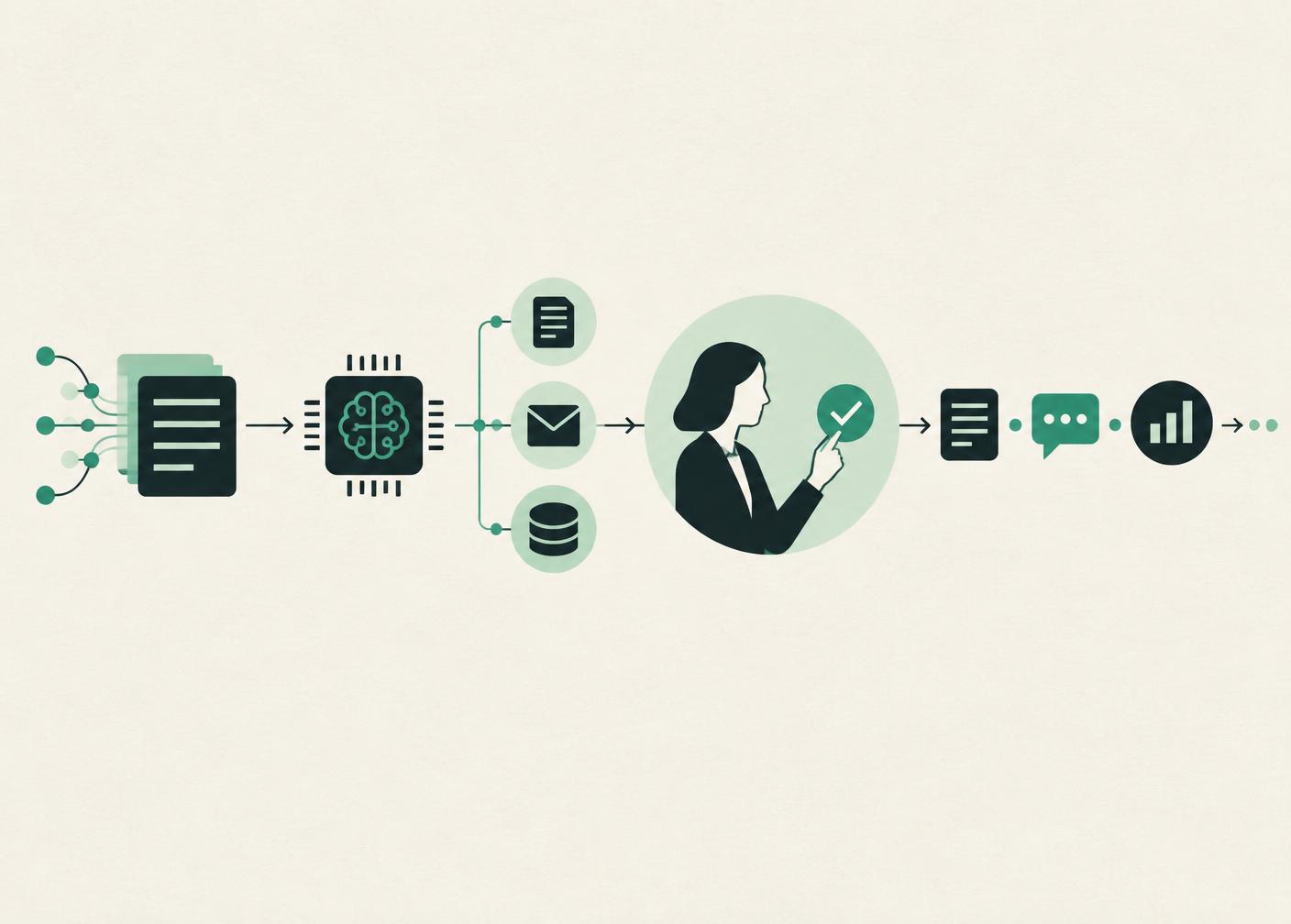
Small B2B sales teams rarely struggle because they lack another dashboard. They struggle because the work around selling keeps piling up: researching prospects, checking qualification details, preparing for calls, updating CRM records, and remembering which proposal needs attention. When a company has 10–50 employees and only 2–10 salespeople, those responsibilities often fall to reps or a founder rather than a dedicated revenue operations team. AI Sales Operations applies artificial intelligence to this operational work, helping teams keep deals organized and moving without adding unnecessary complexity. This guide explains what it covers, how it differs from other sales tools, and how to introduce it with clear human oversight.
What Is AI Sales Operations?
AI Sales Operations is the use of AI to support the administrative, analytical, and coordination tasks that keep a sales process running.
Traditional sales operations includes maintaining customer data, defining processes, reviewing pipeline health, and making sure salespeople have the information they need. Larger organizations may assign this work to specialists. In smaller companies, it often becomes an extra responsibility shared by people who are also prospecting, running demos, and closing deals.
AI can help by interpreting information scattered across emails, meeting notes, CRM records, and business documents. Instead of simply storing that information, it can summarize it, identify missing details, and suggest next steps.
For example, after a discovery call, an AI-supported process might:
- Extract the prospect’s requirements and buying timeline.
- Flag unanswered qualification questions.
- Prepare suggested CRM updates.
- Draft a follow-up for review.
- Highlight a commitment that needs an owner.
The distinction is between helping a team manage its sales process and independently making commercial decisions. AI Sales Operations should support the salesperson’s judgment, not quietly replace it.
What Work Can AI Sales Operations Handle?
The most useful starting points are recurring tasks that require context but do not always require a salesperson to do the initial work.
Lead qualification and research
AI can assemble available company information, summarize a prospect’s business, and compare known details against your qualification criteria.
That gives reps a starting point rather than a blank page. It should also make uncertainty visible. If budget, buying authority, or technical requirements are unknown, the output should say so rather than fill in the gaps.
Follow-up management
Follow-up is more than writing emails. Someone must notice that a response is overdue, remember what was promised, and decide what should happen next.
AI can review recent activity, identify open commitments, and prepare a draft based on the conversation. The salesperson can then check the content, adjust the tone, and approve sending.
Meeting preparation
Before a call, reps often search several places for context. AI can consolidate that work into a brief covering previous conversations, known requirements, outstanding questions, and agreed next steps.
A useful brief prioritizes what matters for the upcoming meeting rather than reproducing every available detail.
CRM hygiene and pipeline monitoring
AI can flag incomplete records, outdated next steps, and inconsistencies between recorded deal information and recent conversations.
It can also help identify opportunities that deserve attention, such as a deal with no upcoming activity or a proposal awaiting a response. These are prompts for investigation—not proof that a deal is lost or ready to advance.
Proposal follow-up
Once a proposal goes out, AI can help track outstanding questions and promised response dates, then prepare an appropriate follow-up for approval.
Tracklibute brings these responsibilities together as an AI Sales Operations platform for small B2B teams. It supports lead qualification, research, follow-up management, meeting preparation, CRM hygiene, pipeline monitoring, and proposal follow-up, with explicit human approval for sensitive actions such as sending emails or changing deal stages.
How Is It Different From a CRM or Other AI Sales Software?
The category can be confusing because many products use similar language. The easiest way to distinguish them is to ask what responsibility each tool takes on.
A CRM is the system of record. It stores contacts, companies, opportunities, and sales activity. AI Sales Operations supports the work around those records: interpreting new information, finding gaps, and preparing updates or actions. It does not replace the CRM.
An AI SDR focuses on prospecting and early sales engagement. AI Sales Operations has a different purpose: supporting the operational work around leads and active deals. Tracklibute is not an AI SDR.
A workflow builder lets users design automations. These can be useful when a team has the time and expertise to define triggers, conditions, and actions. An AI Sales Operations platform is organized around sales responsibilities rather than requiring a small team to build and maintain its own automation system.
AI sales software is the broader category. It can include conversation analysis, forecasting assistance, writing tools, and many other capabilities. AI sales operations software specifically addresses the coordination and maintenance work that keeps a sales process usable.
It is also distinct from marketing attribution and UTM tracking. Those help understand where traffic or leads originated; they do not manage the operational follow-through of a sales opportunity.
Where Does AI Add Value Beyond Basic Automation?
Traditional sales operations automation works well when the rules are straightforward.
For example, a rule can create a reminder a fixed number of days after a proposal is sent. That is useful, but it may miss context: the buyer might have asked for more time, requested a revision, or already scheduled a review call.
AI can interpret those details and suggest a more relevant next step.
Consider a hypothetical prospect email:
> “We’re interested, but our finance lead is away until next Thursday. Could you send the implementation details before then?”
A basic timer might generate a generic follow-up reminder. An AI-supported process could identify two separate items: provide the requested implementation information and revisit the buying conversation after the finance lead returns.
The value comes from connecting language to operational tasks. However, interpretation is not certainty. Dates can be ambiguous, notes can be incomplete, and apparent buying signals can be misleading.
A useful division of responsibility is:
- Rules define boundaries and required approvals.
- AI interprets context and prepares recommendations.
- People verify important details and authorize sensitive actions.
This approach makes automation useful without treating every AI inference as a fact.
How to Choose AI Sales Operations Software
For a small team without RevOps support, evaluation should focus on practical fit—not the longest feature list.
Start with your existing tools and information. Check which systems the product can access, what setup requires, and whether it can work with the records your team actually maintains. Ask vendors to demonstrate supported connections rather than assuming compatibility.
Check how recommendations are explained. Reps should be able to understand why a deal was flagged or a follow-up suggested. Look for source context, visible uncertainty, and a way to distinguish recorded facts from inferred conclusions.
Inspect approval controls. Confirm exactly what can happen automatically and what requires review. For sensitive actions, including external emails and deal-stage changes, approval should be explicit—not an assumption hidden in configuration.
Evaluate everyday usability. A tool that generates an overwhelming review queue may simply relocate the admin burden. Look for prioritized tasks, concise summaries, and easy ways to correct outputs.
Review data handling. Ask about access permissions, retention, deletion, and whether customer data is used to train models. Your requirements should reflect the sensitivity of the information your team handles.
Above all, test the product against a real recurring problem, such as missed proposal follow-ups or time-consuming meeting preparation.
How to Introduce It Without Creating More Work
Begin with one narrow use case and a clearly defined owner.
Meeting preparation can be a useful first test because reps can review a brief before relying on it. Follow-up preparation is another option, provided every outgoing message remains subject to approval.
Before starting, define what a good result looks like. Depending on the use case, you might track:
- Time spent preparing for meetings.
- Open commitments without an assigned next step.
- Drafts requiring substantial corrections.
- Opportunities missing current activity or follow-up plans.
Compare results with your starting point rather than assuming that more generated output means better performance.
During the pilot, review errors as well as useful results. Was a fact unsupported? Was an important detail missing? Did the system recommend an action that ignored the latest conversation?
Use those findings to improve the underlying process and decide whether to expand. AI will not resolve unclear qualification standards or inconsistent deal-stage definitions by itself. Even simple, documented expectations give both people and software a better foundation.
AI Sales Operations helps small B2B teams manage the work surrounding sales—not remove people from important decisions. Start with one recurring operational problem, keep sensitive actions behind explicit approval, and judge success by whether reps spend less time coordinating information while maintaining reliable follow-through.