How to Restart a Stalled Deal: A Follow-Up Playbook for Small B2B Teams
By the Tracklibute team · October 29, 2026
You've spotted a deal that has gone quiet. The proposal went out, the buyer liked it, and then nothing. The temptation is to send a quick "just checking in" and hope. That rarely works, because it asks the buyer to do the work of figuring out what you want.
This playbook covers what to send, when to send it, and when to stop. It's written for small B2B teams where the person following up is usually also the person selling, running demos and updating the CRM.
Key takeaways
- Every follow-up should give the buyer something useful or ask a question that is easy to answer.
- Space follow-ups out over two to three weeks, changing the angle each time.
- Try a second person at the buyer's company before giving up.
- A polite "should I close this?" message often gets the fastest honest answer.
First, work out why it stalled
Before writing anything, look back at your notes and the last conversation. Most stalls fall into one of four groups:
| Likely cause | What it looks like | What usually helps |
|---|---|---|
| Lost priority | Buyer was keen, then went quiet | Reconnect to the problem and its cost |
| Internal blocker | "Need to run it past finance" | Offer material or a call for that person |
| Unclear next step | Last call ended vaguely | Propose one specific, small next step |
| Lost champion | Your contact changed role or left | Find and contact a second person |
If you don't know which one it is, that is itself useful information: your first follow-up should ask.
A three-week follow-up sequence
This is a starting point, not a rule. Adjust the gaps to your sales cycle. The key is that each message has a different purpose.
| Day | Channel | Purpose |
|---|---|---|
| Day 0 | Restate their problem, ask one question | |
| Day 4 | Email or LinkedIn | Share something useful for their next internal step |
| Day 9 | Phone or short email | Offer a smaller next step |
| Day 15 | Email to a second contact | Ask who else is involved in the decision |
| Day 21 | Direct "should I close this?" message |
Day 0: Reconnect to their problem
Remind them why they talked to you in the first place, using their words, and ask a single question.
"Hi Priya, when we spoke on the 12th you mentioned the team was losing track of follow-ups after demos. Is fixing that still a priority for this quarter, or has something else taken over?"
Day 4: Help them with their next internal step
Buyers often stall because they need to convince someone else. Make that easier: a one-page summary for their manager, answers to the security questions, or a simple cost comparison.
Day 9: Offer a smaller step
If a full decision feels too big, propose something smaller. A 15-minute call with their finance lead. A trial with one team. A short reference call.
Day 15: Bring in a second person
If your contact has gone quiet, someone else at the company may still care. Be open about it: "I've been speaking with Priya about follow-up tracking. Is this something your team is still looking at?"
Day 21: Ask if you should close it
This message often gets the most replies, because it's easy to answer and respects the buyer's time.
"I don't want to keep filling your inbox. Should I close this for now and check back in Q1, or is there still something I can help with?"
Why speed and timing matter
Response time matters most early in a deal. A widely cited study in Harvard Business Review found that companies that tried to contact online leads within an hour were nearly seven times as likely to qualify the lead as those that waited even one hour longer (Harvard Business Review). That research is about new leads rather than stalled deals, but the lesson carries over: the longer a buyer's attention drifts, the harder it is to get back. Following up within a day or two of noticing a stall is better than waiting for the end of the month.
What not to do
- Don't send "just checking in" or "bumping this to the top of your inbox". They ask for attention without giving a reason.
- Don't discount straight away. A price cut rarely fixes a priority or a blocker problem, and it sets an expectation for the rest of the deal.
- Don't follow up forever. After the "should I close this?" message, close it, note the reason and set a reminder for a later check-in.
Example: a deal restarted by a smaller step
*This is an illustrative example, not a real customer.* An agency had sent a proposal to a 40-person consulting firm and heard nothing for 12 days. The day-0 email got no reply. On day 4 the account manager sent a one-page summary written for the firm's operations director, who had been mentioned once on a call. The operations director replied asking for a 20-minute call, which became the next step the deal had been missing.
Where Tracklibute fits
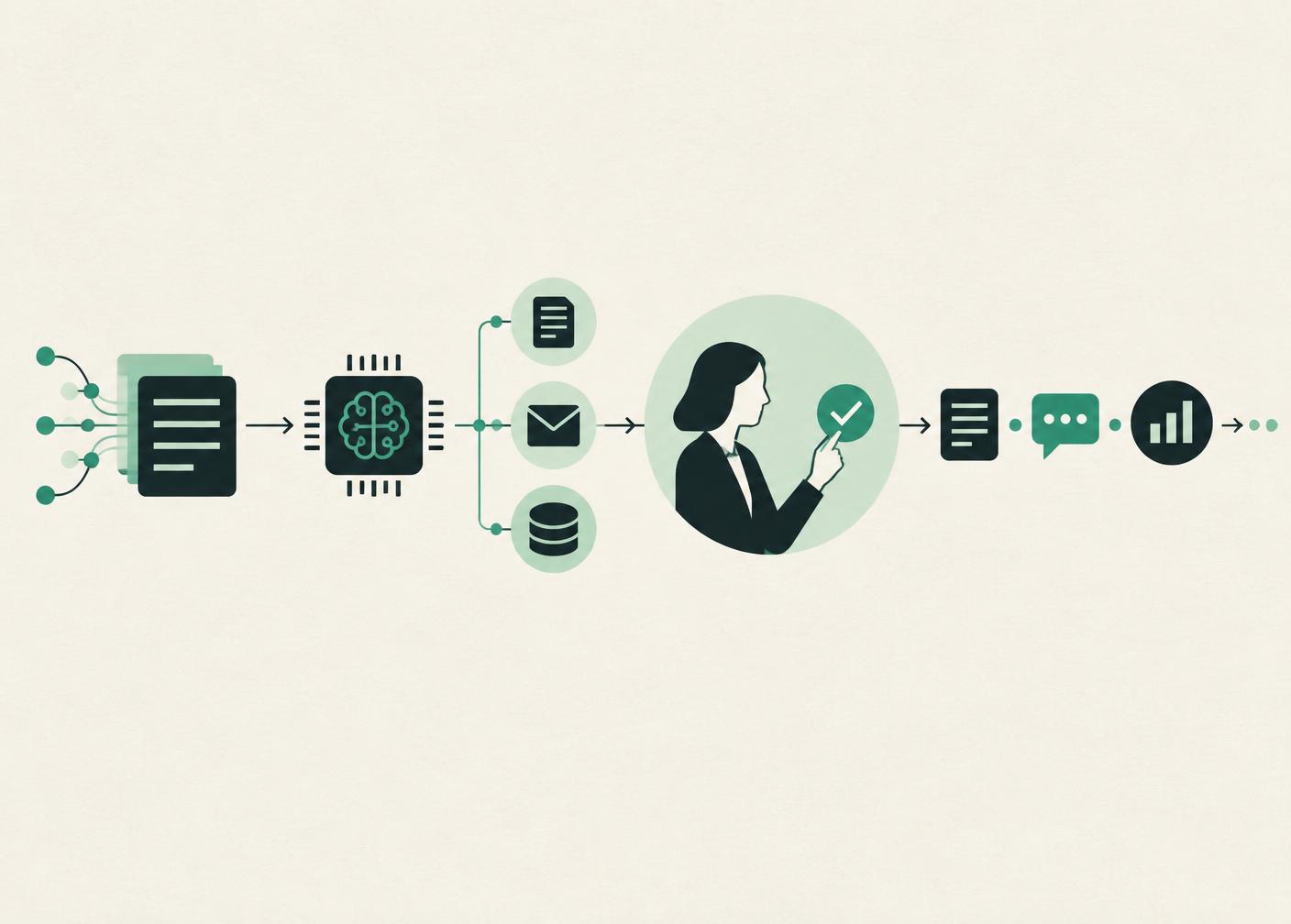
Tracklibute's follow-up management keeps track of which deals are waiting on a follow-up, drafts the next message from your notes and the last conversation, and puts it in an approval queue. You read it, edit it if needed, and approve it. Nothing goes to a buyer without your sign-off. For catching stalls in the first place, see how to spot a stalled deal.
Frequently asked questions
How many follow-ups is too many?
For most B2B deals, four or five well-spaced follow-ups over about three weeks is reasonable. After that, close the deal politely and set a reminder to check back later.
Should I call or email?
Use both. Email is easier for the buyer to reply to on their own time. A short call can unblock things faster when you already have a relationship.
Is it rude to contact someone else at the company?
Not if you're open about it and polite. Mention who you've been speaking with and ask a simple question. Most buyers would rather you find the right person than keep emailing the wrong one.
Sources
- Oldroyd, McElheran and Elkington, The Short Life of Online Sales Leads, Harvard Business Review, March 2011.